Research Profile
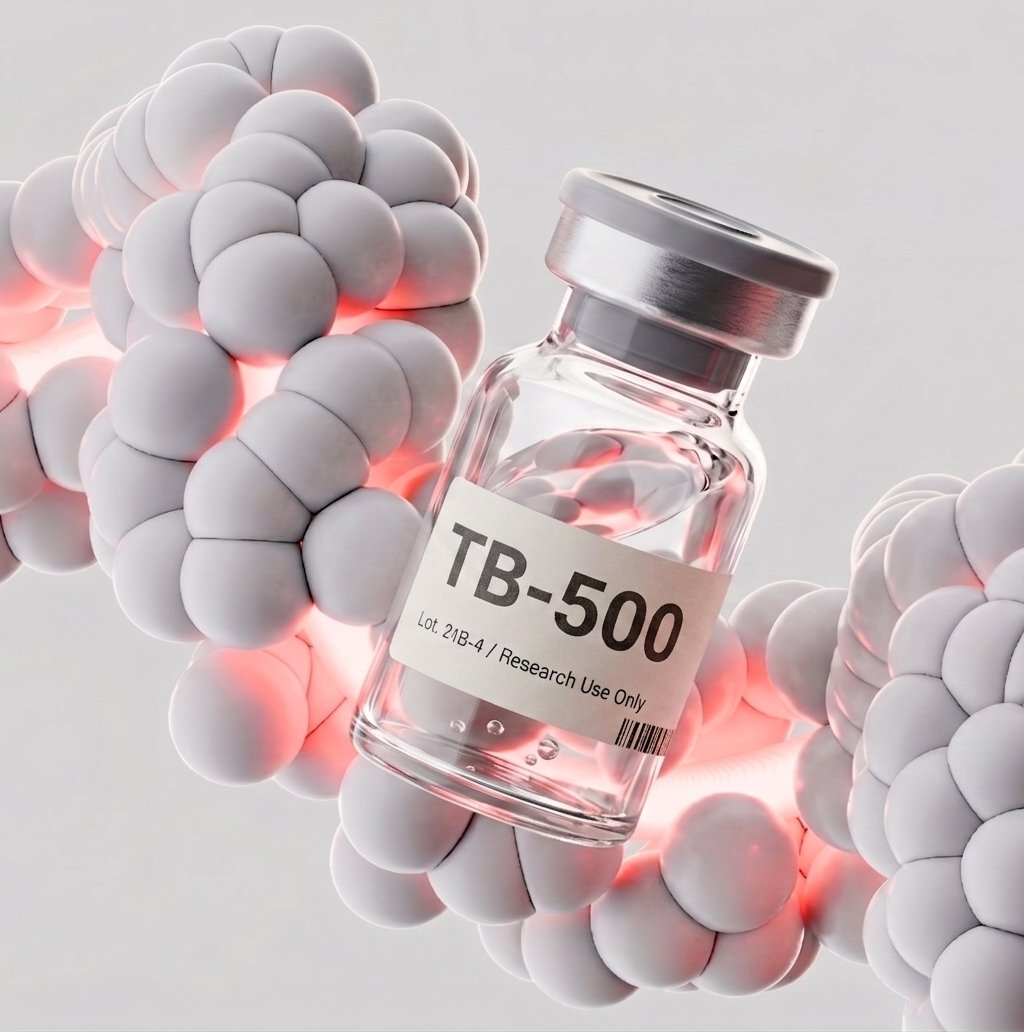
TB-500 is a synthetic analogue of Thymosin Beta-4 (Tβ4), a naturally occurring 43-AA peptide ubiquitously expressed in nucleated mammalian cells. TB-500 is the active Ac-SDKP domain fragment, isolated for improved stability and bioavailability.
Primary mechanism: high-affinity G-actin sequestration (Kd ≈ 0.5–0.7 μM), maintaining a ready pool of unpolymerised actin for rapid cytoskeletal remodelling during cell migration. TB-500 also upregulates VEGF, promoting angiogenesis independently of its actin-binding function.
Musculoskeletal repair — actin regulation drives progenitor cell migration to injury sites. Documented in tendon, ligament, muscle, bone models.
Cardiac regeneration — Tβ4 activates epicardial progenitor cells and promotes cardiomyocyte survival post-MI. Clinical trials conducted.
Wound healing — accelerated closure, improved collagen deposition, reduced scarring in diabetic and normal wound models.
Neurological repair — spinal cord injury and CNS repair; actin-dependent neural cell migration critical to axonal regrowth.
Ocular — FDA orphan drug designation for dry eye and corneal wound healing (Tβ4).
Combination with BPC-157 — complementary mechanisms address the two primary rate-limiting factors in tissue repair: TB-500 (cell migration) + BPC-157 (vascular ingrowth).
Front-loaded protocols: higher frequency in acute phase (daily/EOD at 2.5–5 mg), transitioning to twice-weekly maintenance. Cycling (6–8 weeks on, 2–4 weeks off) for chronic conditions. Standard combo: 2.5–5 mg TB-500 + 250–500 mcg BPC-157, 2–3× weekly.