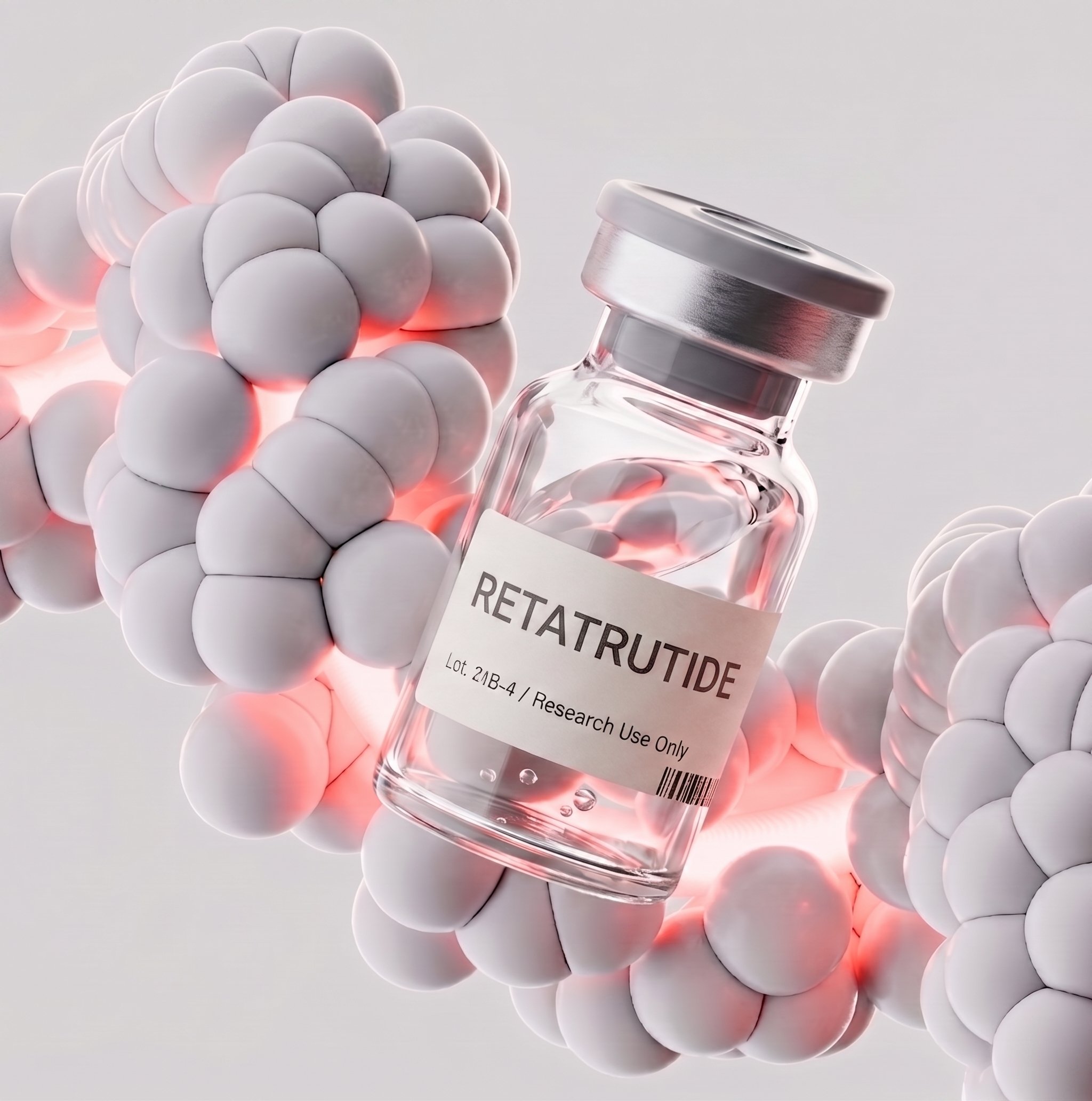
Research Profile
Retatrutide (LY3437943) is a first-in-class triple receptor agonist at GLP-1R, GIPR, and GCGR (glucagon receptor), developed by Eli Lilly. The glucagon component adds direct hepatic fat oxidation and thermogenesis on top of the dual incretin backbone — currently the highest-efficacy anti-obesity compound in clinical development.
TRIUMPH-4 Phase 3 (68 weeks): 28.7% mean body weight reduction at 12 mg; average 71.2 lbs lost. No weight loss plateau observed at trial completion. TRANSCEND-T2D-1 Phase 3: 1.7–2.0% HbA1c reduction, 16.8% weight loss at 12 mg over 40 weeks.
Severe/refractory obesity — triple mechanism targets fat via appetite suppression (GLP-1), insulin sensitisation (GIP), and hepatic fat oxidation + thermogenesis (glucagon). Highest recorded weight loss for any anti-obesity drug.
MASLD/MASH — up to 82% liver fat reduction in Phase 2; substantially exceeds tirzepatide and semaglutide hepatic effects. Dedicated MASH trials ongoing.
Type 2 diabetes — TRANSCEND programme: no weight loss plateau observed through 40 weeks, differentiating it from dual agonists.
Osteoarthritis — TRIUMPH-4 co-primary: 4.5-point WOMAC pain reduction alongside weight loss.
Energy expenditure research — GCGR agonism makes retatrutide uniquely suited to thermogenesis and metabolic rate research vs age-related decline.
Lower effective dose than comparable agents — important given sourcing variability of research-grade retatrutide. Glucagon component elevates RHR; concurrent magnesium glycinate, methylated B-vitamins, and electrolytes commonly reported to mitigate. Escalate above 4 mg cautiously.