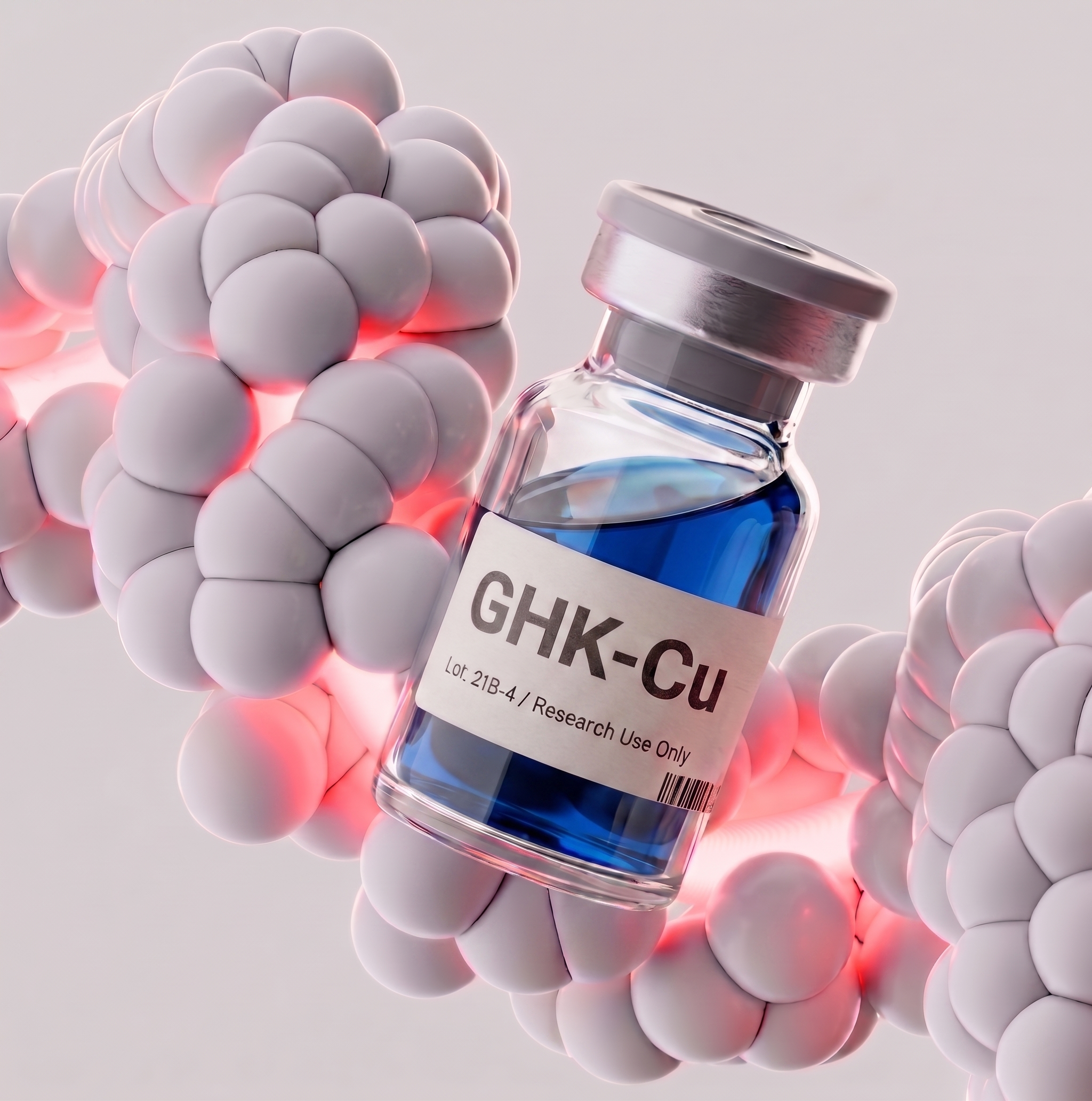
Research Profile
GHK-Cu (Glycyl-L-Histidyl-L-Lysine copper complex) is a naturally occurring human tripeptide first isolated in 1973. Plasma concentration declines from ~200 ng/mL at age 20 to under 80 ng/mL by age 60, correlating with reduced regenerative capacity.
Mechanisms: collagen I, III, IV synthesis stimulation in dermal fibroblasts at picomolar concentrations; MMP-1/MMP-2 upregulation + TIMP-1 (degradation of damaged collagen + new matrix deposition); decorin stimulation (collagen fibril regulation); BDNF, VEGF, BMP-2 growth factor induction; NF-κB anti-inflammatory modulation.
Skin regeneration — reduces wrinkles, increases skin thickness and elasticity, reduces pigmentation, stimulates collagen I and III. RCTs confirm superiority over placebo in post-laser recovery.
Wound healing — diabetic ulcers, Mohs surgical wounds, post-CO2 laser resurfacing. Dual role: stimulates new collagen while degrading damaged matrix — scar remodelling and acute repair.
Hair follicle biology — follicle enlargement, anagen phase prolongation. Investigated for androgenic alopecia; used in scalp mesotherapy protocols.
Systemic regeneration — in animal models, GHK-Cu injected at one site improves healing at distal sites, suggesting systemic signalling. Motivates subQ protocols for skin retraction post-fat loss.
COPD and lung repair — gene profiling: modulates inflammation, fibrosis, and tissue degradation genes in lung models.
Monitor serum copper in protocols exceeding 12 weeks at higher doses. Vitamin C co-administration supports collagen hydroxylation; dietary collagen/glycine provides structural substrate. Mechanistically synergistic — commonly combined.