Research Profile
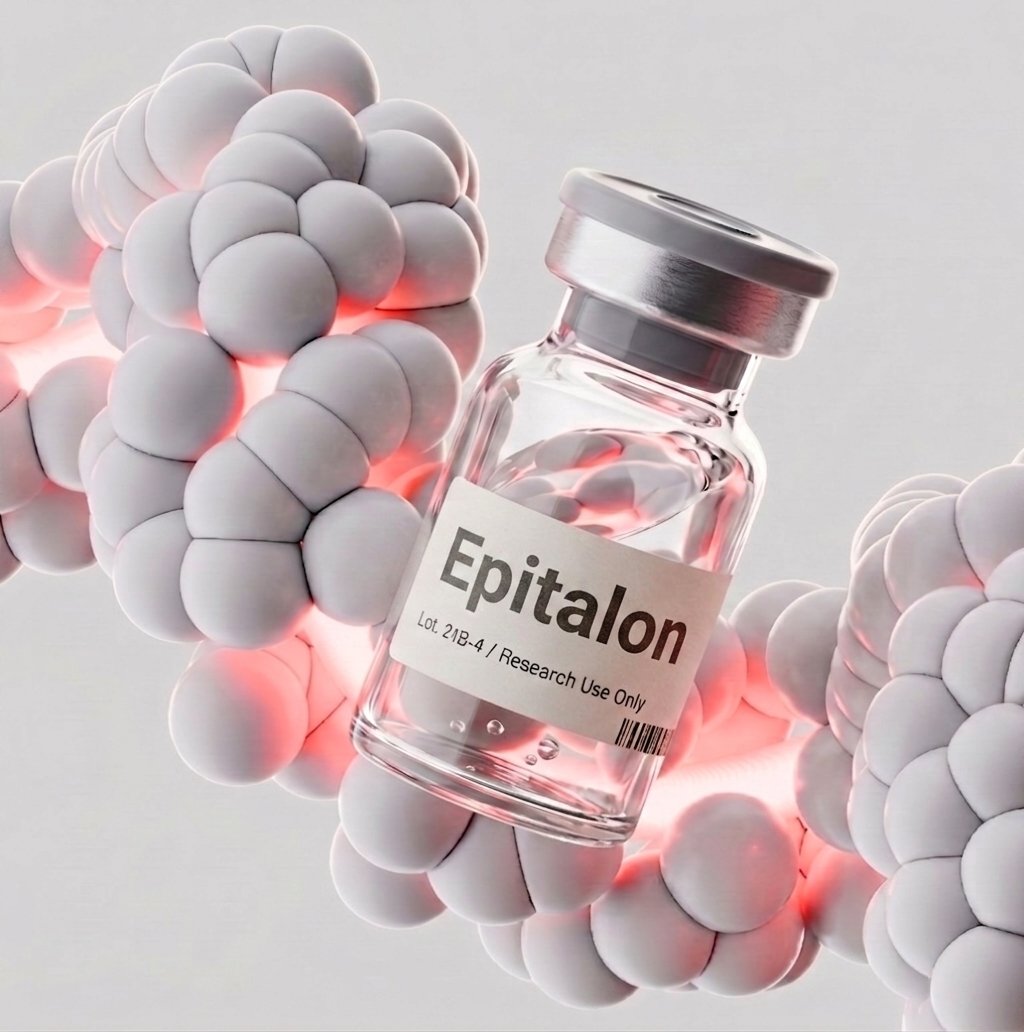
Epitalon (Ala-Glu-Asp-Gly) is a synthetic tetrapeptide derived from Epithalamin — a natural pineal gland polypeptide studied since the 1970s by Vladimir Khavinson at the St. Petersburg Institute of Bioregulation and Gerontology. It is the most researched synthetic peptide in telomere biology.
Two primary mechanisms: Telomerase activation — induces hTERT expression in human somatic cells, enabling telomere elongation beyond the Hayflick limit without oncogenic transformation; Pineal gland restoration — stimulates melatonin secretion, restoring circadian rhythms that decline with age.
Note: the majority of Epitalon research originates from Khavinson's group and has not been independently replicated in large Western trials.
Telomere biology — telomerase induction in somatic cells. Epitalon-treated fibroblasts exceeded the Hayflick limit in vitro. 2025 study confirmed telomere lengthening in multiple human cell lines.
Circadian and melatonin restoration — pineal gland atrophies with age; melatonin declines, disrupting circadian rhythms, immune function, and hormonal balance. Epitalon's pineal-restorative effect relevant to age-related circadian desynchrony.
Lifespan extension models — Khavinson rodent and primate studies: lifespan extension, reduced tumour incidence, improved immune markers. Not independently replicated at scale.
Retinal protection — pineal and retina share common embryological origin (diencephalon). Investigated in retinitis pigmentosa and AMD models; photoreceptor preservation documented.
Antioxidant and DNA protection — reduces oxidative damage markers; improves antioxidant enzyme activity. Consistent with melatonin-restoring effects (melatonin is a potent antioxidant).
Evening administration preferred given circadian and pineal associations. Excellent safety profile across available studies; no significant adverse events reported. Often combined with Pinealon and Thymalin in Khavinson's original bioregulator protocols.