Research Profile
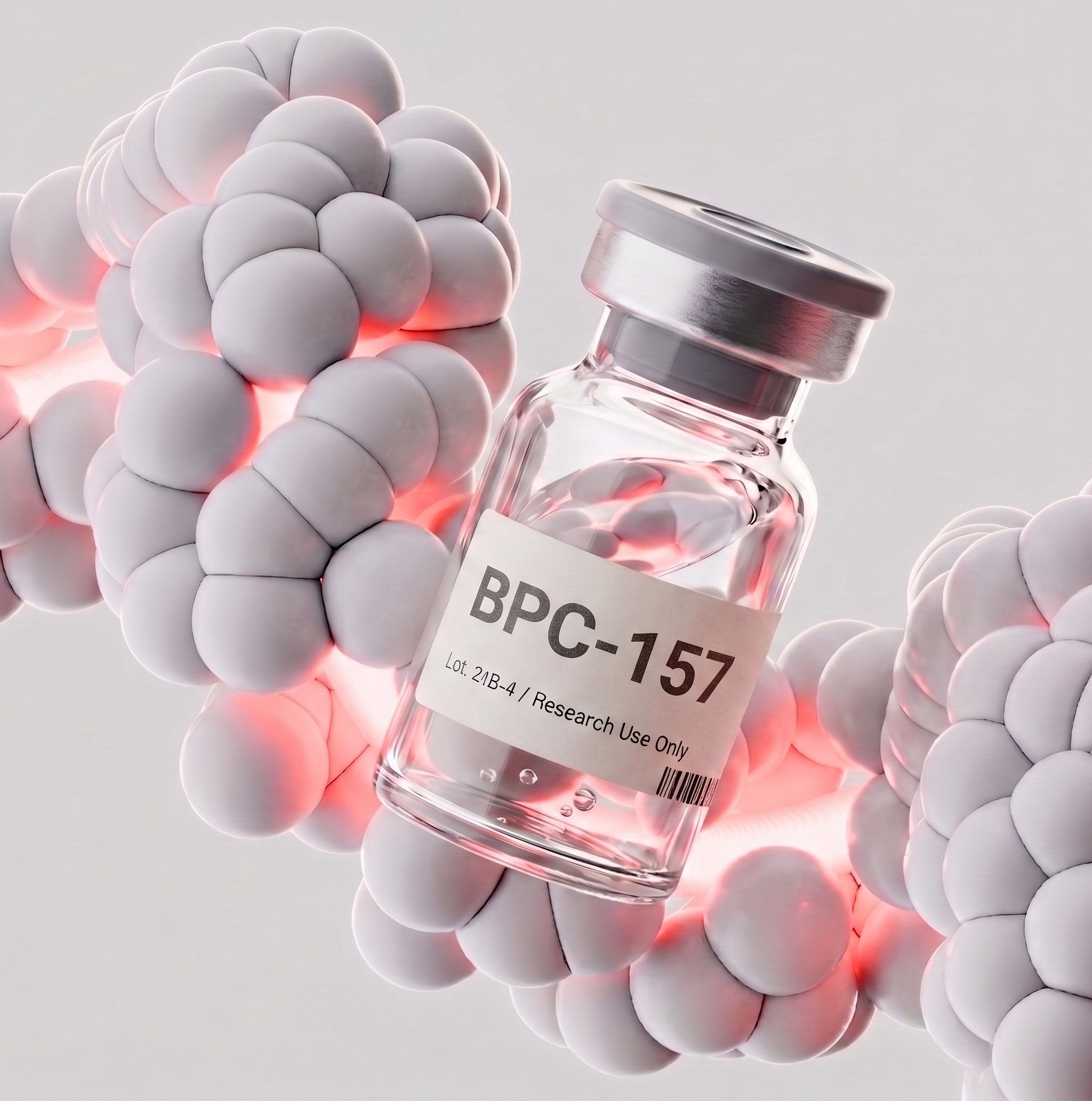
BPC-157 is a stable synthetic pentadecapeptide (15 AA) derived from human gastric juice protein. Uniquely resistant to gastric acid degradation, enabling effective oral administration for GI applications alongside subcutaneous/IM systemic use.
Primary mechanisms: VEGFR2 upregulation and Akt-eNOS pathway activation (angiogenesis); NO signalling modulation preserving homeostasis across tissue systems; FAK-paxillin pathway activation with increased F-actin formation (fibroblast migration); NF-κB inhibition (anti-inflammatory).
Musculoskeletal repair — tendon, ligament, muscle, bone healing in preclinical models. FAK-paxillin activation and VEGFR2 angiogenesis drive faster vascular ingrowth at injury sites.
GI cytoprotection — gastric ulceration, IBD, short bowel syndrome, intestinal anastomosis healing. Oral administration effective for luminal GI applications.
Wound healing — excisional wounds, burns (outperforms silver sulfadiazine in partial-thickness models), diabetic ulcers, complex fistulas.
Neuroprotection — crosses BBB; modulates dopaminergic and GABAergic systems. TBI, spinal cord injury, peripheral neuropathy models.
Vascular repair — activates collateral pathways in vessel occlusion models; anticoagulant-counteracting properties.
Commonly combined with TB-500: 250–500 mcg BPC-157 + 2.5–5 mg TB-500, 2–3× weekly for 4–6 weeks. Complementary mechanisms — VEGFR2 angiogenesis (BPC-157) + actin-mediated migration (TB-500). Refrigerate after reconstitution; stable ~3–4 weeks.